Entering into beauty school for the first time can feel both exciting and overwhelming. New faces, unfamiliar techniques, and a fast-paced learning environment often leave students wondering what those first few weeks will really be like. The good news is that every successful beauty professional started exactly where you are. Your beauty school experience during the first 30 days is designed to help you build confidence, master essential fundamentals, and gradually develop the practical skills needed for a successful career. From hands-on training and classroom instruction to forming lasting connections with instructors and classmates, your first month lays the foundation for everything that follows.
Quick Answer
During your first month, you’ll become familiar with your school’s environment, learn safety and sanitation practices, develop foundational beauty techniques, and begin hands-on practical training. Students enrolled in a beauty school Rock Hill program can also expect to build professional habits, receive instructor guidance, and gain confidence through classroom learning and practical demonstrations.
Getting Comfortable with Your New Learning Environment
The first few weeks focus on helping students adjust to their new surroundings. You’ll meet instructors, tour the campus, become familiar with classrooms and salon spaces, and learn about daily expectations.
This period also allows you to connect with classmates who share similar career goals. Building these relationships early creates a supportive learning environment that can benefit you throughout your education.
Learning the Fundamentals of Beauty Education
Every successful beauty professional begins with a strong foundation. During your first month, instructors introduce the core concepts that support every practical skill you’ll develop later.
Topics often include:
- Professional ethics
- Client communication
- Safety and sanitation procedures
- Infection control practices
- Basic beauty theory
- State board requirements
Understanding these fundamentals prepares students for more advanced practical training as the program progresses.
Developing Hands-On Skills
The skills you begin developing during your first month can open the door to a wide range of career opportunities. According to the U.S. Bureau of Labor Statistics (BLS), employment for barbers, hairstylists, and cosmetologists is projected to grow by 5% from 2024 to 2034, with approximately 84,200 job openings each year on average. Many of these openings are expected to result from industry growth as well as the need to replace professionals who retire or transition into other careers. Building strong technical skills, professionalism, and confidence from the beginning of your beauty school experience helps prepare you to take advantage of these long-term career opportunities.
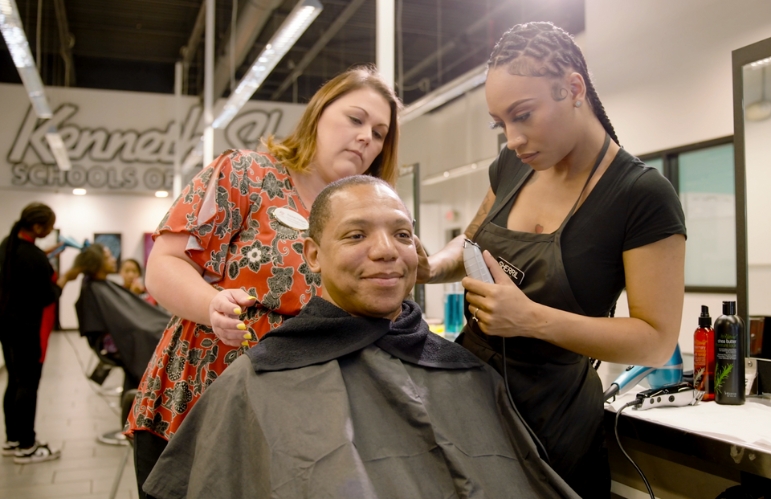
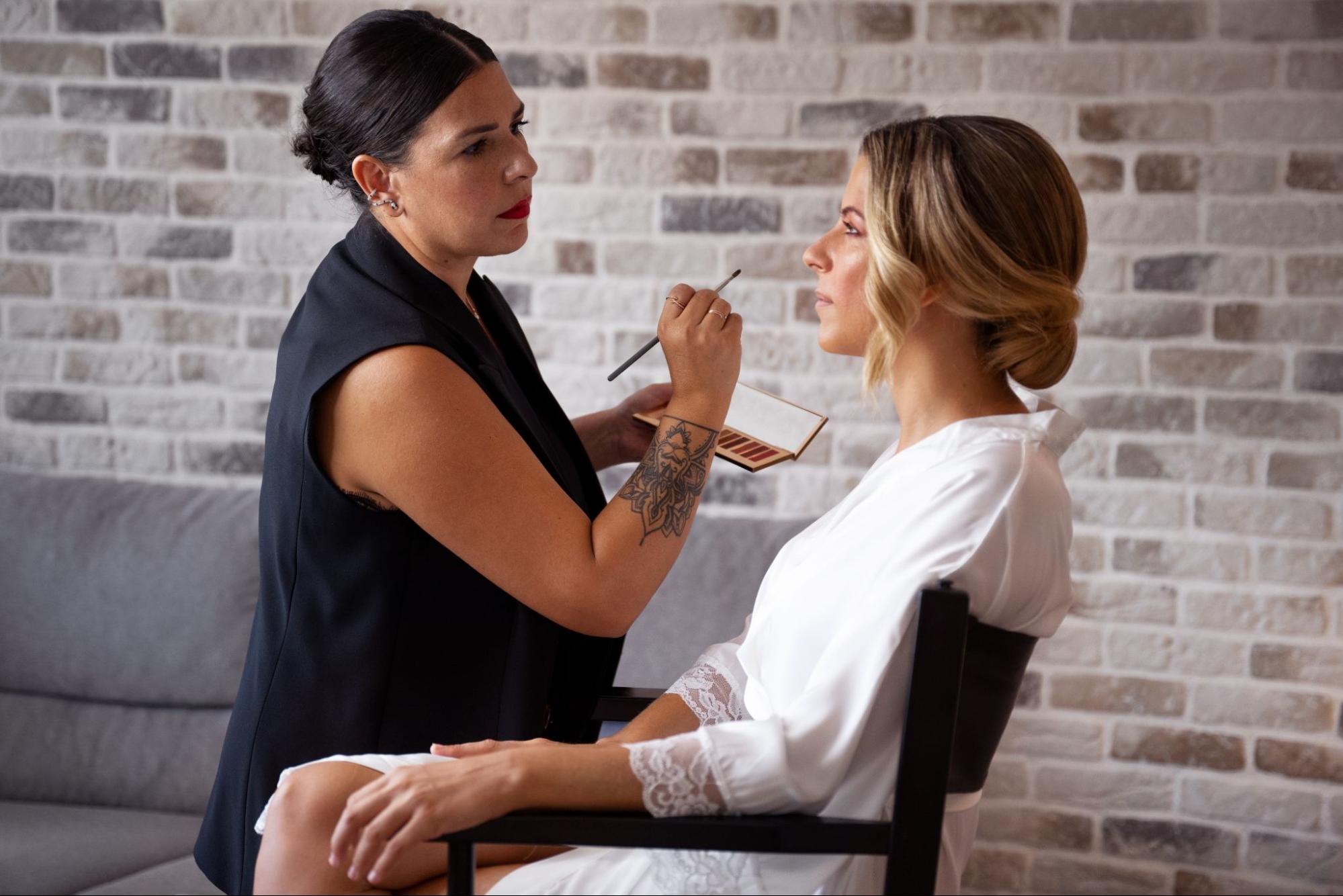
One of the most rewarding parts of the beauty school experience is beginning practical training. Under instructor supervision, students gradually start applying classroom knowledge through demonstrations and guided practice.
Depending on your program, early practical activities may include:
- Basic hair sectioning
- Shampooing techniques
- Blow-drying fundamentals
- Basic styling methods
- Introduction to skincare or nail services
- Proper tool handling
These activities help students build confidence while developing proper techniques from the very beginning.
Building Professional Habits Early
Success in beauty school goes beyond technical ability. During your first month, you’ll begin developing habits that employers value throughout your career.
These include:
- Arriving prepared and on time
- Maintaining a clean workstation
- Following safety procedures
- Communicating professionally
- Managing your time effectively
- Receiving and applying constructive feedback
Developing these habits early helps prepare you for real salon environments after graduation.
What Your First 30 Days May Look Like
Although every student’s schedule is different, the first month generally follows a structured progression.
Step 1: Week 1 – Orientation and Introductions
- Attend campus orientation and meet instructors.
- Learn safety procedures and program expectations.
Step 2: Week 2 – Classroom Theory
- Focus on foundational theory and professional standards.
- Participate in basic demonstrations to understand techniques.
Step 3: Week 3 – Guided Hands-On Practice
- Begin practical exercises under instructor supervision.
- Develop and refine technical skills through structured practice.
Step 4: Week 4 – Independent Practice and Confidence Building
- Increase hands-on experience with less direct supervision.
- Receive feedback from instructors to boost confidence and proficiency
Following a gradual learning process allows students to master foundational concepts before progressing to more advanced techniques.
Tips for Making the Most of Your First Month
Your first month is an opportunity to establish habits that will support your success throughout your education.
Here are a few ways to maximise your learning experience:
- Arrive prepared for every class.
- Ask questions whenever you need clarification.
- Practice techniques whenever possible.
- Take detailed notes during demonstrations.
- Stay organised with assignments and supplies.
- Be open to instructor feedback.
- Support and learn from your classmates.
Taking an active role in your education helps build both technical skills and professional confidence.
Common Challenges New Beauty Students Face
Adjusting to beauty school takes time, and it’s completely normal to encounter a few challenges during your first month.
Some common experiences include:
- Feeling nervous during practical sessions
- Learning unfamiliar terminology
- Balancing classroom and hands-on learning
- Managing study time outside class
- Building confidence with new techniques
Remember that every beauty professional once started exactly where you are. Consistent practice and guidance from experienced instructors help these challenges become valuable learning opportunities.
Why Your First Month Matters
The first 30 days shape many of the habits and skills you’ll continue developing throughout your education. According to the U.S. Bureau of Labor Statistics, employment for barbers, hairstylists, and cosmetologists is projected to generate thousands of job openings each year as demand continues for qualified beauty professionals. Building strong technical knowledge and professional habits early helps position students for long-term career success.
Treat every class, demonstration, and practical session as an opportunity to improve. Small improvements made consistently during your first month often lead to significant growth by the time you graduate.
Build a Strong Foundation for Your Beauty Career
Your first month at beauty school is about much more than learning new techniques; it’s about building the confidence, discipline, and professional mindset needed for a successful career in the beauty industry. Every lesson, demonstration, and hands-on practice session brings you one step closer to achieving your goals. If you’re ready to begin a rewarding beauty school experience, explore the programs at Kenneth Shuler School of Cosmetology and take the first step toward turning your passion for beauty into a fulfilling profession.